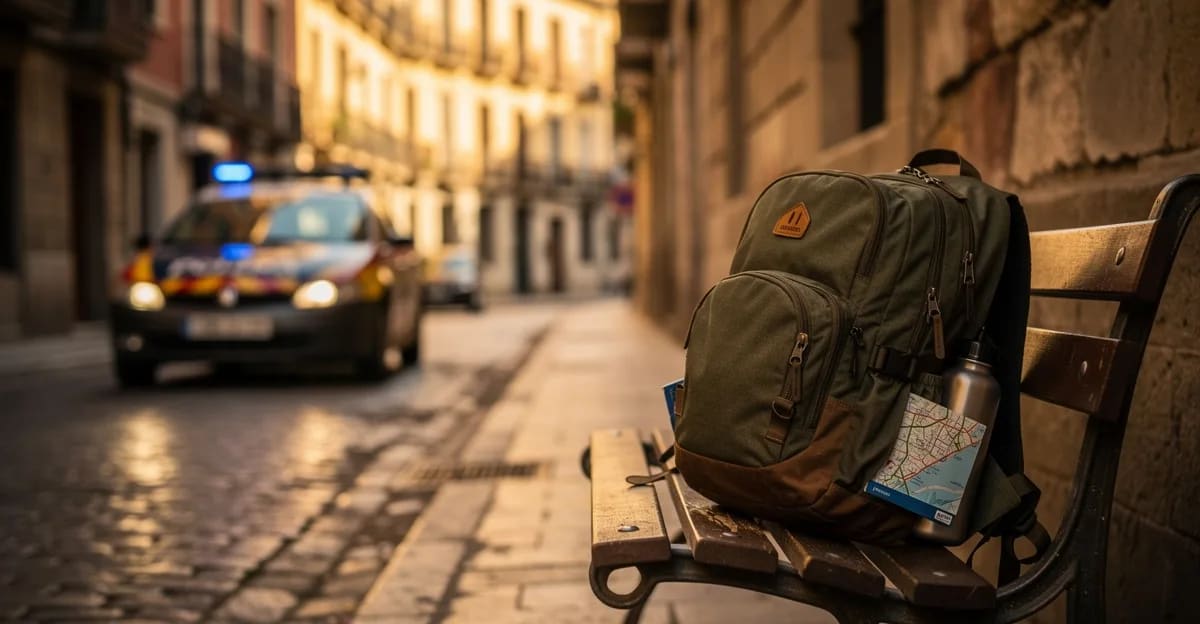
Caught with Weed in Spain: Fines & Your Rights

Marco Ruiz
Cannabis Tourism Editor
What Happens If Police Catch You with Cannabis in Spain?
Getting caught with weed in Spain typically results in an administrative fine of €601 to €30,000, not criminal charges, unless police suspect intent to sell.
→ Visiting Madrid? Get your free club invitation — approved in 24h
Every year, thousands of tourists visit Madrid and wonder the same thing: what actually happens if Spanish police catch me with cannabis? The short answer is reassuring but nuanced—you will not go to jail for personal possession, but you will face a fine that could seriously dent your holiday budget.
Spain operates under a decriminalization model, not legalization. This means cannabis possession for personal use in public spaces is an administrative offense—similar to a traffic ticket—rather than a criminal act. The Ley de Seguridad Ciudadana (Citizens' Safety Law), commonly known as the "Ley Mordaza" or "Gag Law," governs these penalties since its reform in 2015.
The critical distinction is where you are caught and how much you are carrying. Private consumption in your home or inside a registered cannabis social club is not punishable. But the moment you step onto a public street, park, beach, or any space accessible to the public, you are subject to administrative sanctions.
Understanding this system before your trip to Madrid can save you hundreds of euros and significant stress. This guide covers every scenario you might encounter, from a routine police stop to airport security, with practical advice drawn from Spanish legal experts and the real experiences of tourists in the city.
How Much Are Cannabis Fines in Spain?
Cannabis fines in Spain start at €601 for minor infractions and can reach €30,000 for serious offenses like consumption near schools or repeat violations.
Spain's cannabis fine system under Article 36.16 of the Ley de Seguridad Ciudadana operates on a three-tier severity scale:
Minor infractions (€601–€10,400): This covers the vast majority of tourist encounters. Being caught with a small amount of cannabis (under 25-50 grams, depending on the substance) for obvious personal use in a public space falls here. The standard first-offense fine is typically €601—the legal minimum. Police have some discretion, and cooperative behavior generally results in the minimum fine.
Serious infractions (€10,401–€20,200): This tier applies when aggravating factors exist. Consuming or carrying cannabis near schools, playgrounds, or government buildings; being caught during a public event; or having previous cannabis-related fines on record can push you into this range.
Very serious infractions (€20,201–€30,000): Reserved for extreme cases that still don't cross into criminal territory—such as repeated offenses within a short timeframe, consumption in the presence of minors, or possession of quantities that suggest distribution but cannot be criminally proven.
In practice, most tourists receive the minimum €601 fine. Spanish police are experienced with tourist cannabis encounters and typically issue the lowest applicable penalty for first-time offenders who are cooperative. However, arguing, running, or attempting to hide cannabis can escalate the situation and the fine amount significantly.
It's important to note that these fines are not collected on the spot. You receive a formal notification (denuncia) and later receive the fine by mail. Payment within 15 days typically qualifies for a 50% discount, reducing the minimum fine to approximately €300.

When Does It Become a Criminal Offense?
Cannabis possession becomes criminal in Spain when police determine intent to distribute, typically signaled by large quantities over 100g, scales, or baggies.
The line between an administrative fine and criminal prosecution in Spain hinges on one question: is this for personal use or for sale? Spanish courts have established clear guidelines that help police and judges make this determination.
Indicators of personal use (administrative fine only): Carrying less than 25-50 grams of cannabis flower or equivalent, no packaging materials, no scales, no large amounts of cash, and no evidence of sales activity. Having cannabis inside a personal bag, pocket, or vehicle for transit purposes also suggests personal use.
Indicators of intent to distribute (criminal charges): Carrying quantities significantly above personal-use thresholds (generally over 100 grams), possessing individual baggies or packaging, carrying digital scales, having large sums of cash alongside drugs, or being observed making multiple hand-to-hand exchanges.
Under Article 368 of the Spanish Penal Code, drug trafficking carries 1 to 3 years imprisonment plus fines of up to three times the drug's market value. Cannabis is classified as a substance that "does not cause grave harm to health," which means sentences tend toward the lower end compared to cocaine or heroin offenses.
For tourists, the risk of criminal charges is extremely low unless you're genuinely involved in distribution. The typical tourist scenario—carrying a few grams purchased at a cannabis social club or being caught smoking in a park—will never result in criminal prosecution. Spanish courts have consistently upheld that personal possession, even in public, is an administrative matter only.
What Are Your Legal Rights During a Police Stop?
During a police stop in Spain you have the right to remain silent, request an interpreter, refuse vehicle searches without warrant, and contact your embassy.
Knowing your rights during a police encounter in Spain is essential. Spanish law provides specific protections regardless of your nationality:
Right to remain silent: You are not obligated to answer questions about where you obtained cannabis, how much you have, or any other self-incriminating questions. You must provide identification (passport or national ID) when requested, but beyond that, silence is your right under Article 24 of the Spanish Constitution.
Right to an interpreter: If you don't speak Spanish, you can request an interpreter. Police encounters for administrative infractions rarely involve formal questioning, but if you're taken to a station, interpretation services must be provided. In Madrid's tourist areas, many officers speak basic English, though this is not guaranteed.
Right to refuse consent searches: Spanish police can pat you down (cacheo) during a routine stop, but searching bags, backpacks, or vehicles requires either your consent or a court order. In practice, police often ask you to voluntarily open your bag. You can refuse, though this may lead to being detained until a warrant is obtained. For small amounts, most officers won't escalate beyond a pat-down.
Right to contact your consulate: As a foreign national, you have the right to contact your embassy or consulate if detained or fined. This is guaranteed under the Vienna Convention on Consular Relations. Your consulate cannot get you out of a fine, but they can provide legal referrals and ensure your rights are respected.
Right to appeal: You can challenge any administrative fine within 15 days through a recurso de alzada (administrative appeal) or within two months through the contencioso-administrativo court. Hiring a Spanish lawyer for appeals is recommended, as the process is conducted entirely in Spanish.
What Actually Happens in Common Tourist Scenarios?
Most tourist cannabis encounters in Madrid involve police confiscating the substance, issuing a €601 fine notification, and letting you continue your day.
Here are the most common scenarios tourists face in Madrid, and what realistically happens in each:
Scenario 1: Smoking in a park or on the street. This is the most frequent encounter. Police patrol popular areas like Retiro Park, Malasaña, and La Latina regularly. If spotted smoking, officers will approach, ask for ID, confiscate the cannabis, and issue a denuncia (fine notification). The entire process takes 10-20 minutes. You'll receive the actual fine by mail weeks later—typically €601. No arrest, no station visit.
Scenario 2: Carrying cannabis between your accommodation and a club. Technically, transporting cannabis in public is an infraction. However, police rarely stop pedestrians for no reason. If you're stopped in a random check (common near nightlife areas and during festivals), having a few grams in a sealed container in your pocket or bag will result in confiscation and a fine. Being discreet significantly reduces your chances of being stopped.
Scenario 3: Smoking on a hotel balcony or terrace. This is a grey area. If your balcony faces a public street and neighbors or passersby can see and smell you, it could be reported. Police generally won't come to your hotel for this, but hotel management may ask you to stop or charge a cleaning fee. Choosing cannabis-friendly accommodation eliminates this risk.
Scenario 4: Cannabis found during a traffic stop. DUI laws in Spain are strict. If you're driving and police find cannabis, you face both a cannabis possession fine AND a potential DUI charge if a saliva test shows recent consumption. DUI penalties include fines of €500-€1,000 and license suspension. Never drive after consuming cannabis in Spain.
Scenario 5: Buying from a street dealer. This is the highest-risk scenario. Street purchases in Madrid not only risk scams but expose you to police stings targeting dealers. Being present during a dealer arrest can complicate your situation significantly, even as a buyer.
How Should You Handle a Police Encounter in Spain?
Stay calm, show your passport immediately, be respectful, do not run or argue, and never attempt to discard cannabis when police approach.
If you find yourself in a police encounter over cannabis in Madrid, following these practical steps will minimize consequences:
1. Stay calm and stop immediately. The moment a police officer addresses you, stop what you're doing. Attempting to run, throw cannabis away, or swallow it will escalate the situation from a routine fine to potential obstruction charges. Spanish police are trained to notice disposal attempts and will search the area.
2. Present identification immediately. Have your passport or a photocopy accessible. Spanish law requires you to identify yourself when requested by police. Refusing to identify yourself is a separate offense that can result in detention.
3. Be polite but say little. A respectful "Buenos días" or "Hola" goes a long way. Answer basic questions about your identity but avoid volunteering information about where you got the cannabis, how much you have elsewhere, or other details. You are not required to confess or explain.
4. Do not resist confiscation. Police will take any cannabis they find. Attempting to prevent this is legally classified as resistance to authority (atentado contra la autoridad) and is a criminal offense carrying potential imprisonment. Let them take it.
5. Ask for a copy of the denuncia. You're entitled to a copy of any fine notification issued. This document contains the details you'll need if you want to appeal or pay the fine with the early-payment discount.
6. Note the officer's badge number. If you feel your rights were violated, the officer's identification number (visible on their uniform) allows you to file a formal complaint later through the Defensor del Pueblo (Ombudsman) or at your local police station.
How Do You Pay Cannabis Fines in Spain?
Cannabis fines in Spain arrive by mail within 2-6 months. Paying within 15 days earns a 50% discount, reducing the minimum €601 fine to roughly €300.
Understanding the fine payment process is crucial, especially if you've already left Spain by the time the fine arrives:
Timeline: After receiving the on-the-spot denuncia, the formal fine notification typically arrives at the address on your documentation within 2 to 6 months. If you provided a Spanish address (hotel), it goes there first. If you provided your passport details, it may be sent to your home country through international administrative channels.
Early payment discount: Spanish administrative law offers a 50% reduction if you pay within 15 days of receiving the formal notification. For the standard €601 fine, this means paying approximately €300. This early payment also means you waive your right to appeal.
Payment methods: Fines can be paid online through the Sede Electrónica del Gobierno de España portal, at any Spanish bank, or through a Spanish lawyer if you've left the country. Payment from abroad is possible but more complex—bank transfers to the designated account number on the fine notification are accepted.
What happens if you don't pay? Ignoring the fine is risky. Spain can pursue international debt collection through EU frameworks (for EU citizens) or flag the debt for future visits to Spain and the Schengen Area. If you plan to return to Spain, an unpaid fine can result in complications at the border, including detention until payment is resolved. For non-EU citizens, unpaid fines may affect future visa applications.
Appeals process: If you believe the fine was unjust, you have 15 days for an administrative appeal (recurso de alzada) or two months for a court challenge (recurso contencioso-administrativo). Successful appeals are rare for standard cannabis fines but possible if procedural errors occurred during the stop.
Where Is Cannabis Enforcement Strictest in Madrid?
Madrid police enforcement varies by neighborhood—tourist zones see active patrols while residential areas like Chamberí and Arganzuela have lighter enforcement.
Police enforcement of cannabis laws in Madrid is not uniform. Understanding which areas have heavier police presence helps you make informed decisions:
High enforcement zones: Puerta del Sol, Gran Vía, Plaza Mayor, and Retiro Park see regular police patrols specifically watching for public consumption. These are Madrid's primary tourist corridors, and officers are experienced at spotting cannabis use. The areas around major transport hubs (Atocha, Chamartín stations) also have increased security.
Medium enforcement zones: Malasaña and Lavapiés have a more relaxed atmosphere, but don't mistake this for tolerance. Plainclothes officers operate in these neighborhoods, particularly on weekends. La Latina during the Rastro market and Chueca during nightlife hours also see targeted patrols.
Lower enforcement zones: Residential neighborhoods like Chamberí, Arganzuela, and the outer districts have lighter police presence regarding cannabis specifically. However, any public consumption spotted by police anywhere in Madrid will result in a fine.
Events and festivals: During San Isidro, Pride Week, and other major events, police presence increases dramatically across the city. Cannabis enforcement intensifies during these periods, with dedicated units targeting public consumption in festival areas.
The safest approach: Consume only inside verified cannabis social clubs or in fully private spaces. Walking between your accommodation and a club with a small amount is common practice, but keeping it discreet and sealed in a container is essential.

What Happens with Cannabis at Spanish Airports?
Bringing cannabis through any Spanish airport or border crossing is illegal and can result in criminal drug trafficking charges, even for small amounts.
This is the one area where there is absolutely no grey area: transporting cannabis across any international border—including between EU/Schengen countries—is a criminal offense under both Spanish and international law.
Airport security: Madrid-Barajas Airport (MAD) uses X-ray machines, trained dogs, and random searches. Cannabis detected at security or customs will be treated as attempted smuggling, regardless of quantity. Even a forgotten gram in your jacket pocket can trigger criminal proceedings under Article 368 of the Penal Code.
Schengen borders: While passport-free travel within the Schengen Area means fewer physical border checks, customs enforcement still operates. Buses and trains crossing from Spain to France or Portugal may encounter random customs checks, particularly on known routes.
Arriving in Spain with cannabis: Bringing cannabis into Spain from another country—including from the Netherlands, where it may have been purchased legally in a coffeeshop—is international drug trafficking. The fact that it was legal where you bought it provides no defense under Spanish law.
Leaving Spain with cannabis: Do not attempt to take any cannabis products purchased at Madrid clubs or elsewhere out of Spain. This includes flower, edibles, CBD products with THC above 0.2%, vape cartridges, and concentrates. Leave everything in Spain or dispose of it before heading to the airport.
CBD products: CBD products with less than 0.2% THC are technically legal to transport within the EU, but testing at airports is impractical and any cannabis-derived product can cause delays and questioning. If traveling with CBD, carry proof of THC content and purchase receipts.
How Can You Enjoy Cannabis in Madrid Legally?
The safest way to enjoy cannabis in Madrid is exclusively through verified cannabis social clubs, which provide legal private consumption spaces.
The good news is that enjoying cannabis in Madrid without legal issues is entirely possible—it just requires understanding and respecting the system:
Use cannabis social clubs exclusively. Joining a verified cannabis club through proper channels gives you a legal, private space to consume. Inside the club, you're protected by the private-space provision of Spanish law. No fine, no risk, no stress. This is how locals do it, and it's the smartest approach for tourists.
Never consume in public spaces. No matter how relaxed Madrid feels, public consumption always carries risk. The fine system is designed to penalize exactly this behavior. What looks like a quiet corner can have a police car passing by at any moment.
Use the invitation system. Getting your club invitation through WeedMadrid's verified system ensures you're directed to legitimate, well-established clubs with good reputations. These clubs maintain strict legal compliance, making your visit safe and enjoyable.
Never buy from street dealers. Beyond the obvious scam risks, street purchases put you in contact with criminal operations. Police stings targeting dealers can sweep up buyers too, complicating what should be a simple holiday experience.
Don't transport cannabis outside the club. The ideal approach is to consume everything at the club. If you must take some back to your accommodation, use a small, sealed, odor-proof container. Keep it out of sight and take the most direct route. Never carry more than you'd consume in one session.
Respect the culture. Madrid's cannabis scene thrives because it operates within boundaries. By following club etiquette and respecting the legal framework, you contribute to a sustainable system that benefits everyone—locals and visitors alike. Start with our weed Madrid guide to plan your visit safely.
Sources & References
- Ley Orgánica 4/2015 de Protección de la Seguridad Ciudadana (Ley Mordaza)
Official text of Spain's Citizens' Safety Law governing administrative cannabis penalties.
- Código Penal Español — Artículo 368 (Delitos contra la Salud Pública)
Spanish Penal Code article defining drug trafficking penalties.
- Constitución Española — Artículo 24 (Tutela Judicial Efectiva)
Constitutional rights including right to silence during police encounters.
- CMS Expert Guide to Cannabis Laws in Spain
International law firm analysis of Spain's cannabis legal framework.
Common Questions About Cannabis Clubs Madrid
Will I go to jail for having weed in Spain? +
How much is the fine for smoking weed in public in Spain? +
Can Spanish police search my bag for drugs? +
What happens if I get caught with weed at Madrid airport? +
Do I have to pay a Spanish cannabis fine if I leave the country? +
Is it legal to smoke weed inside a cannabis club in Madrid? +
Related Articles
Is Weed Legal in Spain? Laws, Fines & Cannabis Clubs (2026)
€30,001 fines for public use — but cannabis clubs are 100% legal. Real laws, how to join clubs, and 5 mistakes tourists make. Updated May 2026.
Avoid Cannabis Scams in Madrid: 2026 Safety Guide
How to avoid cannabis scams targeting tourists in Madrid: red flags, fake delivery traps, street dealer risks, and safe alternatives in 2026.
Cannabis Tourism Madrid: The 2026 Complete Guide
Plan your cannabis trip to Madrid: best neighborhoods, club access, costs, etiquette, legal rules, and insider tips for tourists visiting in 2026.
Cannabis Club Etiquette Madrid: Unwritten Rules
Unwritten rules of Madrid cannabis clubs: consumption etiquette, social norms, tipping, phone policies, and how to be a respectful member.
First Visit to a Madrid Cannabis Club (2026)
What to expect at your first Madrid cannabis club visit: preparation checklist, common mistakes, club etiquette, and insider tips for 2026.